Local meaning, playable form
Localization reaches beyond translated strings. A practical way to examine visual references, social mechanics and the player’s ability to understand a game.
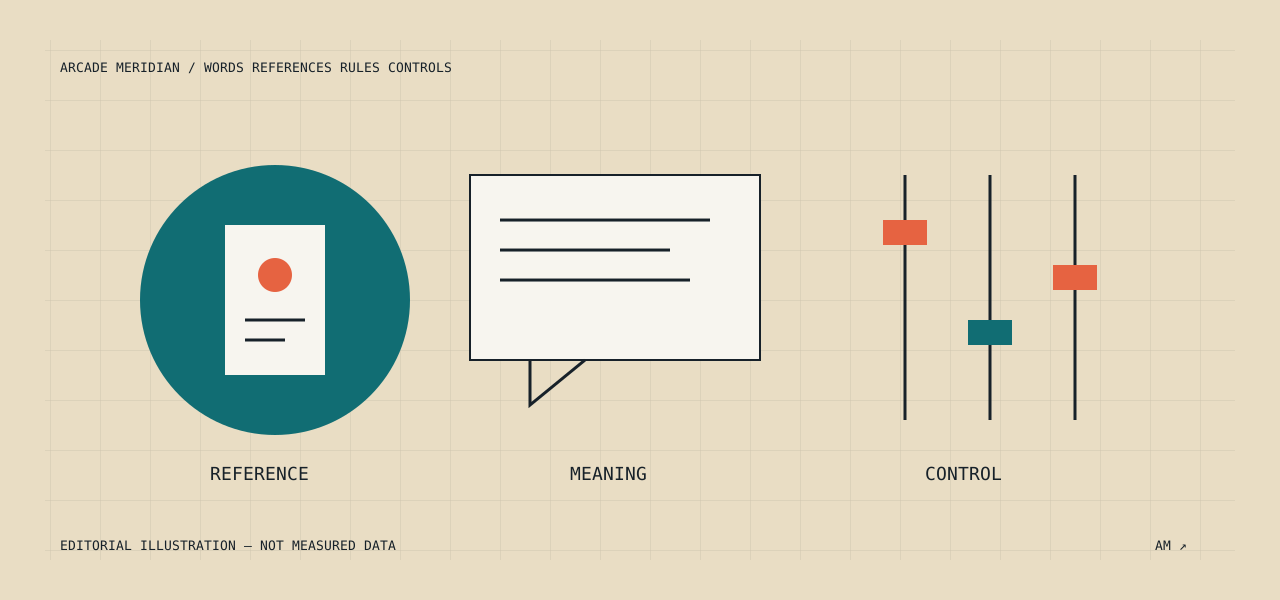
Recognition is the beginning
A familiar place name, a style of clothing or a well-known game piece can give a player a way into a work. Recognition is valuable, but it does not guarantee understanding. The player still needs to know what can be touched, what a rule means and how the game responds to a choice. A localized experience has to carry both meaning and action.
This essay offers a design-review method rather than a claim about what any national audience enjoys. Africa is not a single visual language or a single social setting. Even within one language community, familiarity with a reference can differ by age, location and personal experience. Those differences are reasons to test interpretation, not obstacles to be smoothed into a universal audience profile.
Separate four layers
The first layer is language: interface text, dialogue and the words used to explain rules. The second is reference: places, objects, music and other details that carry associations. The third is convention: what a button, turn or reward is expected to do. The fourth is access: whether the player can perceive and control the experience at all.
These layers interact but should be reviewed separately. A beautifully translated prompt can still use an unfamiliar metaphor. A recognizable board can still hide the active turn. An expressive sound cue can still be unusable for someone who cannot hear it. A review that records only translated strings will miss these distinctions.
Read actual creative work without inventing its reception
Maliyo’s catalogue includes Lagos Fashion and Whot King, giving a reader concrete titles through which to ask questions about setting and familiar forms. The catalogue establishes examples of the studio’s presentation. It does not tell us how particular players interpret those references or whether they improve enjoyment.
Free Lives’ catalogue offers a different set of creative examples. Comparing public descriptions can generate questions about tone and interaction, but a studio’s location is not an explanation for its creative choices. We have not interviewed the teams or conducted comparative playtesting. Any claim about intent or reception would require additional evidence.
An example review session
Imagine an original turn-based game with shared pieces and a short tutorial. Before recruiting participants, write the question: can a new player identify the active turn and explain one valid move? This is narrower and more observable than asking whether the game feels local. The exercise is hypothetical and should not be read as a reported study.
Show the player the opening state without explaining it. Ask them to describe what they think can happen next. Observe their first action, then ask which cue informed it. If the action differs from the intended rule, record the mismatch before deciding whether the problem lies in translation, layout or the rule itself.
Repeat with a different text length and with sound unavailable. Keep the task stable so that the comparison remains interpretable. Do not treat one participant’s explanation as representative of a country. A small session can identify a confusing cue; it cannot establish the distribution of cultural familiarity across a population.
Social mechanics need explicit consent
A game that invites a player to share, compete or coordinate introduces expectations beyond the screen. A team should make the action clear: what will be visible, who will receive it and whether it can be undone. Familiarity with a social activity does not imply consent to a digital version of it.
For the invented turn-based game, a private practice round can help players learn without immediately exposing a mistake to others. An invitation should describe the activity before asking for a commitment. These are proposed design choices, not claims that one social model is preferred in a particular region. The right choice depends on the actual game and the people who test it.
Accessibility belongs in localization work
The Xbox Accessibility Guidelines provide a reference for considering barriers to play. They are design guidance, not a legal compliance certificate. In a localization review, they encourage questions that translation alone may overlook: can a prompt be read at a useful size, can information be understood without relying on one sensory channel, and can a player adjust controls before the difficult task begins?
Text expansion is also a layout question. A longer label should not cover the active piece or turn a clear choice into an abbreviation that only experienced players understand. Record the context of a string alongside its translation so that reviewers can assess its role in the interaction.
Report what the session actually showed
A useful account distinguishes the intended meaning, the observed interpretation and the change made afterward. Keep quotations only with permission and do not invent a participant voice to make the story vivid. Note the build, language, task and limits of the sample.
The result can be modest and still useful: one cue became clearer, one control became reachable, one instruction stopped assuming prior knowledge. That is stronger evidence than a broad declaration of authenticity. For the surrounding release journey, read The long road from a game to a player. For how we label evidence and interpretation, see our editorial methodology.
Sources & boundaries
Source review: . Undated sources are not assigned an invented publication date.
- Maliyo Games: Studio and game catalogue ↗
A studio catalogue establishes examples, not national revenue, employment or audience share.
Publication and review dates
Source publication: Undated. Source accessed and reviewed: 2026-11-17. Publisher: Maliyo Games.
- Microsoft: Xbox Accessibility Guidelines ↗
The guidance explicitly does not establish legal compliance or represent all players.
Publication and review dates
Source publication: 2023-06-08. Source accessed and reviewed: 2026-11-17. Publisher: Microsoft.
- Free Lives: Cape Town studio and catalogue ↗
A single studio is not a representative sample of South African development.
Publication and review dates
Source publication: Undated. Source accessed and reviewed: 2026-11-17. Publisher: Free Lives.
Original desk analysis; no interviews or field testing claimed. Corrections policy · Inspect Signals Atlas